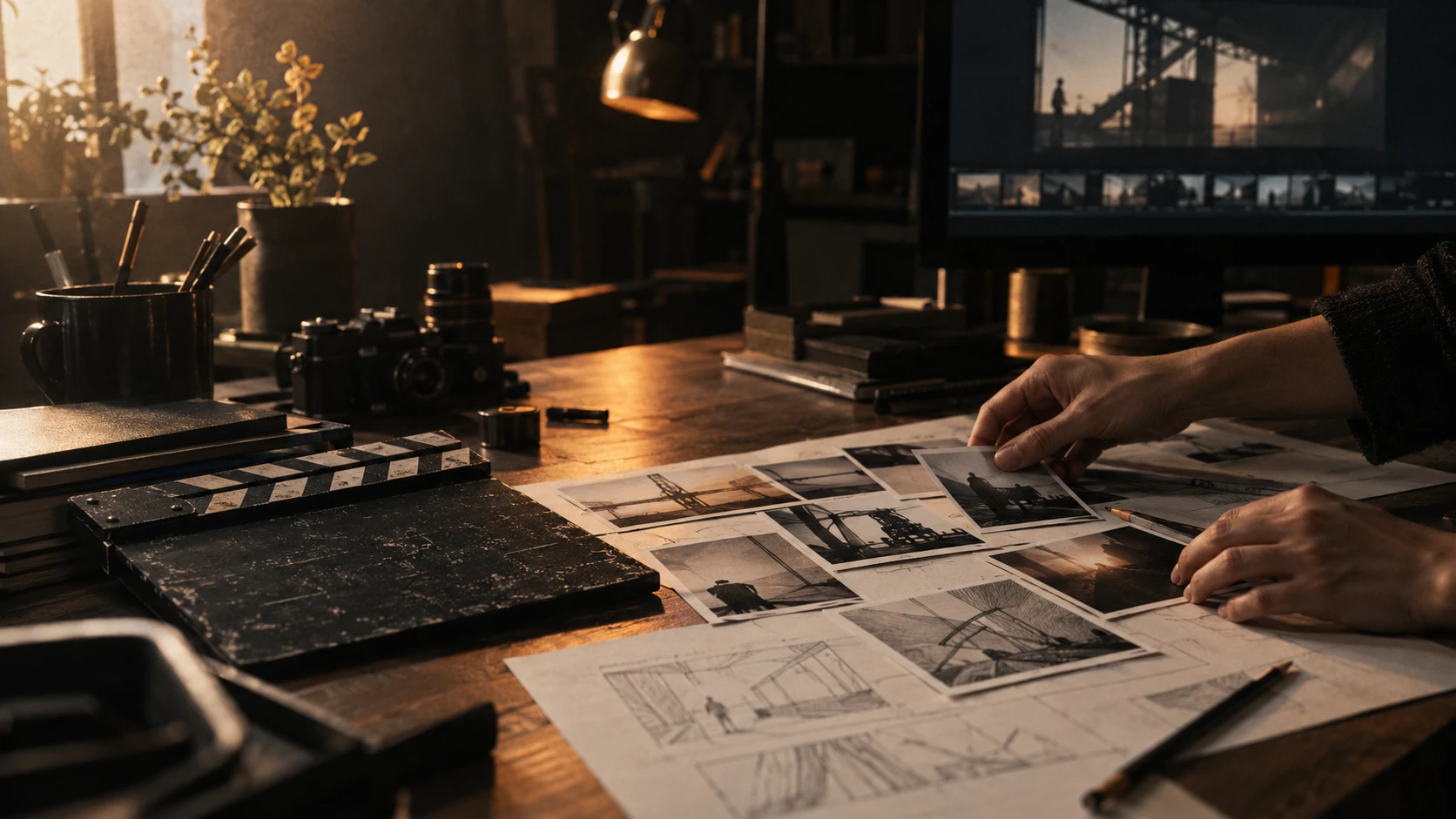
An edit is a way of arranging attention over time. A picture gives us information. The next picture can answer it, question it, or leave us waiting. Even three ordinary images can feel different when their order changes.
Try three frames.
Picture a window, an empty chair and a hand reaching for a door. Put the window first and the scene might begin with distance. Start with the hand and it may begin with action. Hold on the chair and absence becomes the thing we notice.
- Order changes what we expect.
- Duration changes what we notice.
- Sound can carry a thought across a cut.
Sometimes the most useful cut is the one that gives a moment room to breathe.
Listen as well as look.
A sound can arrive before its picture. A quiet beat can sit after a movement. Try watching an imagined sequence without sound, then think about the room tone that could hold it together. The relationship between pictures matters as much as each image on its own.
This sample explores editing through an invented scene. It is not a case study, a report from a BRNDYUG edit suite, or a claim about a delivered film.